

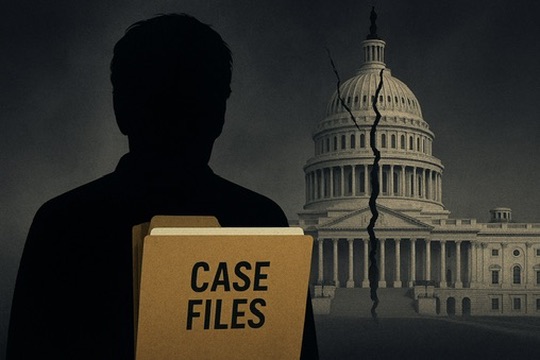
The release of documents related to Jeffrey Epstein’s decades-long sex trafficking operation has done something rare in modern American life — it has given citizens of every political persuasion a reason to demand the same thing at the same time: accountability.
The names, the networks, and the negligence exposed in these files represent not a partisan scandal, but a systemic failure of justice that crosses every aisle, every donor class, and every administration that looked the other way.
The Department of Justice must act. Not selectively. Not strategically. Fully, fearlessly, and without regard for the political consequences of doing so.
The Victims Come First — Full Stop
Before any conversation about politics, optics, or institutional reputation, there must be an acknowledgment of what this case is actually about. Young girls — many of them teenagers from vulnerable backgrounds — were trafficked, abused, and exploited by powerful men who believed their wealth and connections made them untouchable. For many of those victims, the legal system has already failed them once. Some waited years for prosecutions that never came. Some watched Epstein receive a sweetheart deal in 2008 — a non-prosecution agreement that a judge has since ruled was illegally concealed from victims — and were told, in effect, that their suffering mattered less than his convenience.
These women deserve more than a congressional press conference. They deserve a functioning justice system that follows evidence wherever it leads, regardless of who it implicates.
This Is Not a Democrat or Republican Problem — It Is Both
One of the most important truths embedded in the Epstein files is how thoroughly bipartisan the scandal is. Flight logs, visitor records, and testimony implicate figures from across the full spectrum of American political power and beyond. Former presidents, sitting politicians, wealthy donors, and influential power brokers from both parties have been named or connected to Epstein’s social orbit. His access was not ideological — it was transactional. He collected proximity to power the way others collect art, and power in America wears both red and blue.
Any attempt to weaponize this investigation for partisan gain should be called out and rejected with equal force. Elected officials who want to use the files purely to damage their adversaries on the other side of the aisle, and those who want to minimize the investigation to protect their own, are engaged in the same cynical betrayal of the victims. The Department of Justice cannot allow itself to become a tool of one party’s agenda. A selective prosecution — one that pursues figures from one party while quietly shelving evidence about the other — would be worse than no prosecution at all. It would confirm the darkest suspicion that justice in America is for sale to whoever holds power.
What is needed is a fully independent, adequately resourced special investigation operating transparently and free from political interference. Grand juries should be empaneled. Witnesses should be compelled. Co-conspirators — those who recruited victims, facilitated travel, provided security, or remained deliberately silent — should face the full weight of federal law.
The Mid-Term Reckoning
Candidates running in the 2026 mid-term elections should understand that the Epstein files have fundamentally changed the landscape of voter expectations around accountability. This is no longer a fringe issue animating only the most committed activists. Across polling data and social sentiment, Americans — regardless of party — express overwhelming support for full prosecution of anyone connected to Epstein’s trafficking network.
Candidates who remain evasive, who deflect, or who call for “moving on” will do so at their electoral peril. Voters are watching to see who demands a real investigation and who quietly hopes the story dies. Those who call loudly and consistently for nonpartisan accountability will find a receptive audience that cuts across traditional voting blocs — including independents, young voters, and parents who find the subject viscerally urgent regardless of their party registration.
Conversely, any candidate found to have connections to Epstein — or found to have opposed or obstructed accountability efforts — faces potentially disqualifying exposure. Opposition research in dozens of races will almost certainly include Epstein-adjacent records and associations. Candidates would be wise to get ahead of any connections now, voluntarily and transparently, rather than have them surface in the closing weeks of a campaign.
The mid-terms also present an opportunity for a new kind of political courage: lawmakers who cross party lines to co-sponsor legislation demanding a full DOJ investigation, who hold joint press conferences insisting on accountability for members of their own party, and who make child protection and justice reform a defining issue of their campaigns. That candidate — the one who puts victims above party — will find the political winds at their back.
The DOJ Must Restore Its Own Credibility
The Department of Justice itself has a credibility problem it cannot ignore. The 2008 Epstein deal, brokered under a U.S. Attorney who was later appointed to a cabinet position, the mysterious circumstances of Epstein’s 2019 death in a federally operated prison, and the years of slow-walked proceedings since have fed a corrosive public cynicism about whether powerful people are ever truly subject to the law. Every day that passes without aggressive, visible prosecutorial action deepens that cynicism.
The DOJ leadership must recognize that institutional trust is not rebuilt through press releases. It is rebuilt through indictments, through trials conducted in open court, and through sentences that reflect the gravity of the crimes committed against children.
The Epstein files are not a political gift to one side or the other. They are a moral obligation presented to the entire country. The question is not whether justice is possible. The question is whether the people and institutions entrusted with delivering it have the integrity to do so — and whether the American public will hold them to account if they don’t.